Notion becomes a different tool when you build the data engine first.
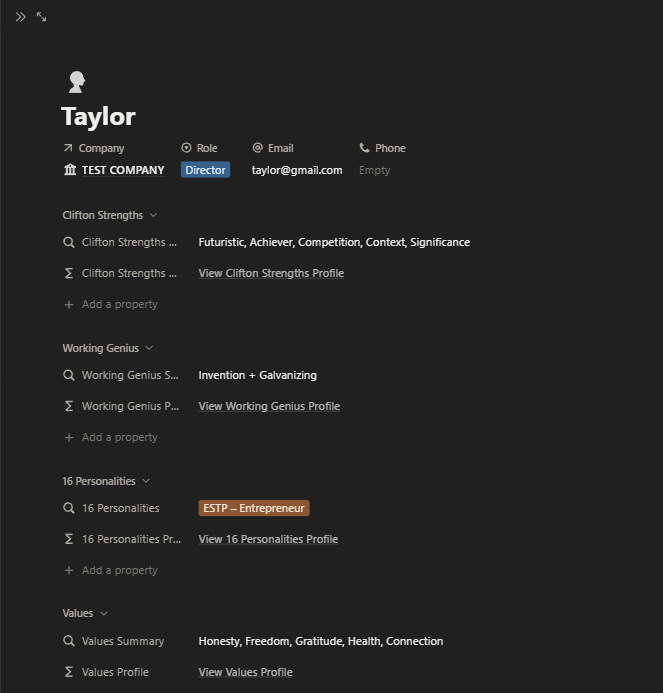
I’m mapping a complex assessment setup right now. Working Genius, strengths, personality, values.. all of it. And it keeps proving the same point.
The hard part isn’t making Notion look good. The hard part is building the structure underneath so the system runs without you babysitting it. That structure is the data engine.
What I mean by “data engine”
A data engine is the set of databases that hold the truth, plus the connections and rules that make that truth usable. It’s where the data lives, how it connects, and what updates automatically.
When the engine is solid, dashboards feel effortless. When it’s weak, everything becomes fragile pages held together by good intentions.
Why most Notion systems get messy
Most people build Notion like a document. They start with pages, create subpages, and make it look tidy. Then real life arrives.. more clients, more projects, more edge cases, and more people touching the system.
That’s when the admin creeps in. You start copying and pasting information, hunting for the latest version, and updating multiple places because the same info exists in multiple places. That’s not a UI problem. It’s an architecture problem.
The rule that fixes most of it
If information will be referenced more than once, it belongs in a database. If it needs to be filtered, compared, reported, tracked, assigned, or summarised, it belongs in a database.
Pages are for narrative. Databases are for reality. Once you accept that, your builds stop collapsing under their own weight.
What “engine first” looks like
Before I touch the dashboard, I define the objects. This is the part most people skip. Ask what you’re actually tracking, what each thing needs to store, how it relates to everything else, and who needs to see what.
Then build the foundation databases. In the assessment example, that might be People, Assessments, Responses, Recommendations, and Reports. Once those exist and are connected properly, the rest becomes much easier because you’re designing how the business runs, not just a pretty homepage.
Where automations actually help
Automations are a multiplier once the structure is correct. When your databases are clean and connected, the automation ideas become obvious and useful. For example, when a new person is created, create their first assessment record. When an assessment is completed, generate the next steps. When a report is due, surface the key points automatically.
If the engine is messy, automations just create more mess.. faster.
The takeaway
Notion becomes a different tool when you build the data engine first. The UI is the icing, but the engine is the cake.
If your Notion system feels heavy, don’t redesign the dashboard. Go down a layer and fix the structure underneath. Once the engine is right, the entire experience on top feels simple.
If you want help building this properly for an architecture firm or service business, that’s exactly what I do here: https://www.nickharrison.co/notion